Learning in the Professions
We recognize that educator support and training is vital to the work we do. The Office of Rural Promise offers access to high quality professional development opportunities so every teacher, counselor, or administrator is best equipped to serve our students and families.
Learning in the Profession offers consulting services including the planning, writing and use of micro-credentials, custom-designed professional learning (leveraging institutional content expertise) and program evaluation for grant awardees.
Empowering Teacher Learning
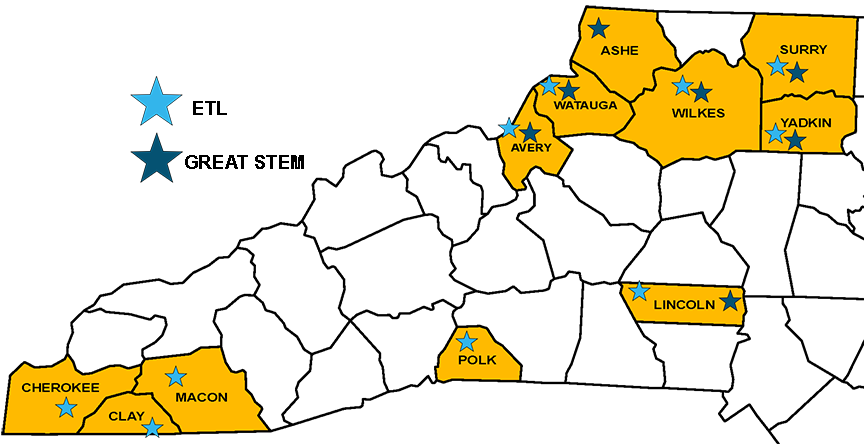
The Empowering Teacher Learning (ETL) Project is a 5-year, $12M research project funded by the US Department of Education that will measure the impacts of a teacher-directed professional learning program in rural, western North Carolina middle schools.
GREAT STEM
The Gaining Retention and Effectiveness through Advancing Teacher-directed STEM (GREAT STEM) Professional Learning is a 3-year, $1M research project funded by the National Science Foundation (NSF) that will measure the impacts of a teacher-directed professional learning program in rural, western North Carolina high schools.
Innovation Cohort (InnoCo)
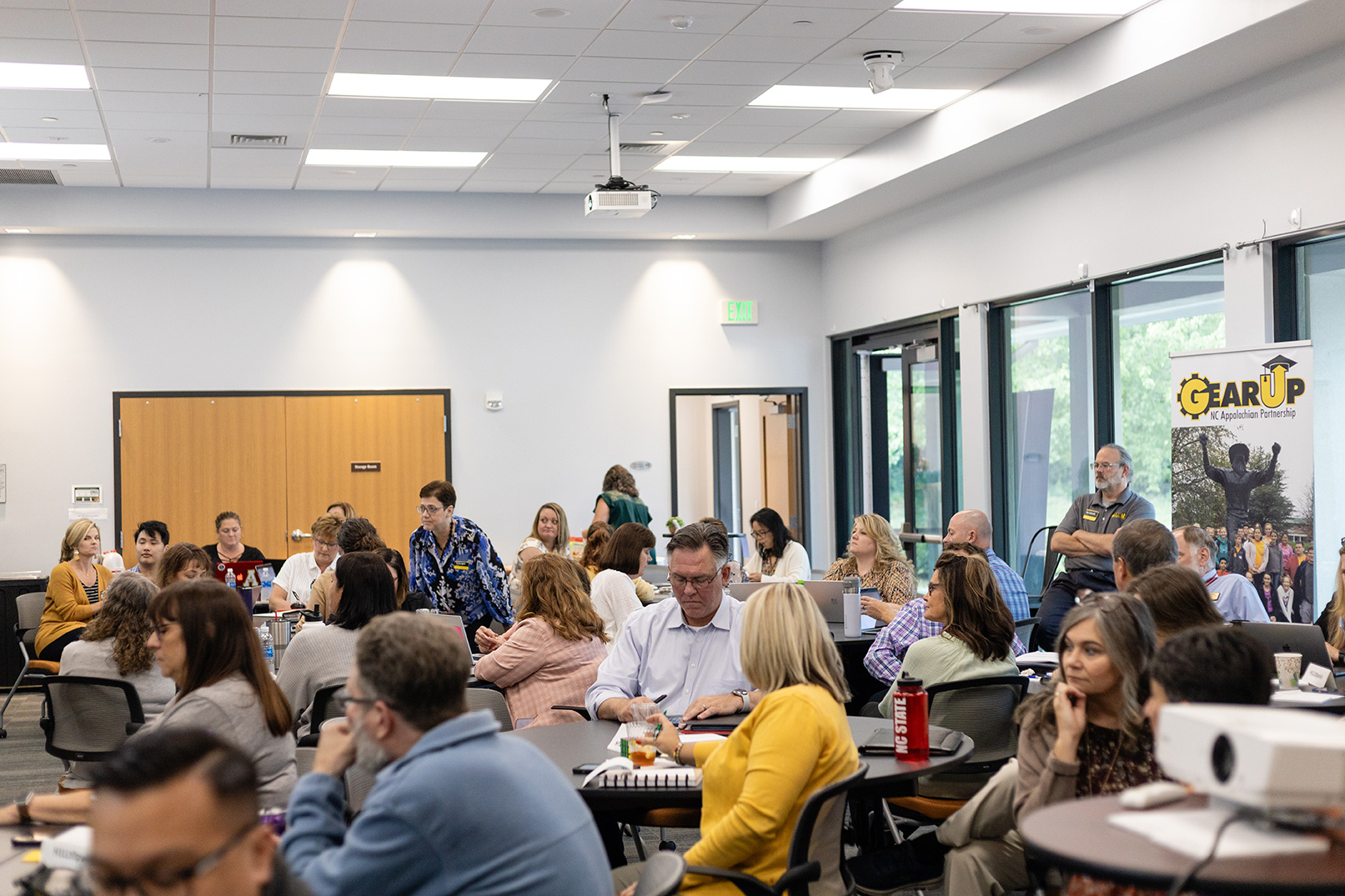
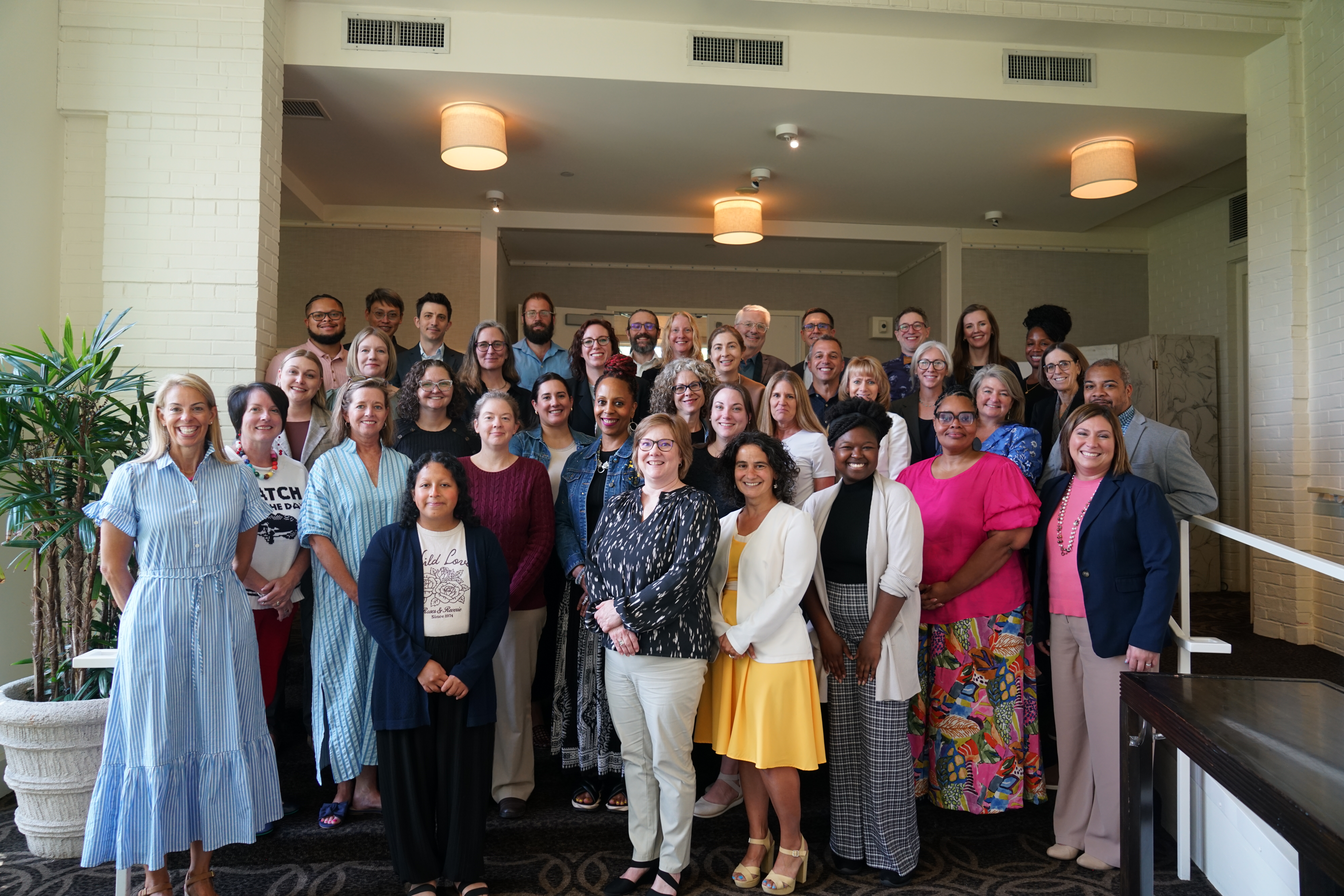
The ETL Innovation Cohort, a group of 37 innovative teacher leaders with experience in self-directed learning collaborate with colleagues across the region to build a network of support to better serve all students. The program combines asynchronous micro-credentials with Navigator coaching to support teacher development, utilizing three face-to-face learning sessions focused on the 5-step self-directed learning process for students and developing their teacher leadership skills.
- Ashley Condrey, Avery Middle School
- Elizabeth Hope Hogan, Avery Middle School
- Michelle Stephens, Avery Middle School
- Hope Mough, Bethel Elementary School
- Chelsie Eldreth, Bethel & Valle Crucis Elementary School
- Floyd Little, Central Wilkes Middle School
- Kristin Breann Ward, Central Wilkes Middle School
- Carly Clonch, Central Wilkes Middle School
- Allison Foster, Central Wilkes Middle School
- Emily Alice West-Dula, Central Wilkes Middle School
- Howard Weaver III, Central Wilkes Middle School
- Angie Robinson, Central Wilkes Middle School
- LeAnn Lassiter, Central Wilkes Middle School
- Kathryn (Kat) Romanish, Central Wilkes Middle School
- Ellen L. Mastin, Central Wilkes Middle School
- Lisa S. Bryant, Cove Creek Elementary School
- Wilmoth, Elkin Middle School
- Kerry Norman, Elkin Middle school
- Sadie LaPointe, Green Valley Elementary School
- Debra Cloer, Macon Middle School
- Patti Elkin, Macon Middle School
- Christina Merritt, Macon Middle School
- Rebekka Anastasia Dugger, North Wilkes Middle School
- Levonda Griffin, North Wilkes Middle School
- Julie Miller, Polk County Middle School
- Stephanie Champion, Polk County Middle School
- Charlotte Grabman, Polk County Middle School
- Elisa Flynn, Polk County Middle School
- Eric Taylor Eaton, Polk County Middle School
- Jeanne Ferran, Polk County Middle School
- Melanie Watson, Starmount Middle School
- Richard Allen Ingram Valle Crucis School
- Natasha Lyons, Valle Crucis Elementary School
- Richard Allen Ingram, Valle Crucis Elementary School
- Theresa Marie Self, West Lincoln Middle School
- Jordan Goode, West Lincoln Middle School
- Lisa Barkley, West Lincoln Middle School
- Angela Miller, West Lincoln Middle School
Program Summary
The Empowering Teacher Learning Professional Learning Project is an innovative research initiative that focuses on shifting the way teachers engage with professional learning in rural, western North Carolina. Traditional forms of professional development are district-directed, time-based, and adhere to a “one-size-fits-all” model. ETL offers an alternative that is teacher-directed and competency-based that is known as the Teacher-Directed Professional Learning (TDPL) model.
“When teachers are given choice and support in their professional learning, they will select opportunities for growth that meet the needs of themselves, their students, and their communities.”
In this initiative, teachers aren’t mere participants; they’re active partners in their own professional growth. Empowered with opportunities to earn licensure renewal credits (CEUs) and monetary stipends, teachers have agency to tailor their individual learning journeys. Through an innovative approach leveraging online platforms and competency-based micro-credentials, educators can enhance their skills in a manner that suits their unique needs and preferences. What truly distinguishes ETL is its collaborative ethos. Bringing together the expertise and resources of NC Schools, App State, NCDPI, Digital Promise, and NC State, this initiative embodies the collective belief that empowering teachers yields benefits that extend far beyond the confines of the classroom. By granting educators the autonomy and support to shape their learning trajectory, the ripple effects are felt not only by teachers themselves but also by their students and the wider community.
Components
- Teacher Needs Assessment
- Learning Contract and Goal Setting
- Self-Directed Learning Journey
- Reflection
Partners
- Appalachian State University
- Ashe County Schools
- Avery County Schools
- Cherokee County Schools
- Clay County Schools
- Digital Promise
- Leading EDge Learning
- Lincoln County Schools
- Macon County Schools
- myFutureNC
- NC Department of Public Instruction
- NC State University
- Surry County Schools
- Watauga County Schools
- Wilkes County Schools
- Yadkin County Schools
Program Model
The ETL team supports educators throughout their micro-credential journey and measures the impacts of the professional learning program on teachers, students, and school districts.
Needs Assessment aligned with NCEES Standards
Teachers reflect on and assess their own professional learning needs.
Teacher Self-Directed Learning Plan
Teachers use their personalized data to set goals for their professional learning for the upcoming school year.
Self Directed Learning Journey Using Micro-credentials
Teachers select online, competency-based micro-credentials to accomplish their goals.
On-going Collaborative Reflection
ETL Navigators – Micro-credential Coaches – provide one-on-one support to teachers, helping them to reflect on their practice and facilitating collaboration amongst teacher participants.
Benefits
- Teachers earn a stipend per micro-credential
- Teachers decide on professional learning needs, goals, topics, and pacing
- Teachers earn competency-based online micro-credentials
- Coaches support teachers on micro-credential journey
- 100% of earned micro-credentials can be used towards recertification CEUs
- Research team will measure project impacts and share all relevant data with districts
Questions?
Latest Learning in the Professions News
What are teachers saying?